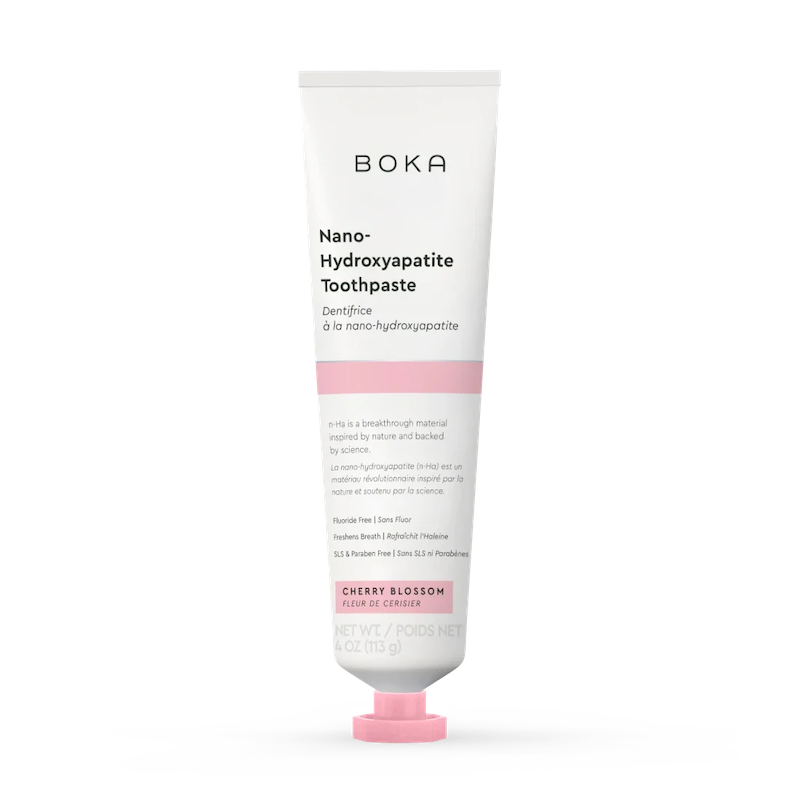
Boka Toothpaste – Nano Hydroxyapatite Toothpaste
Summary
Boka Toothpaste is an oral-care product formulated around nano hydroxyapatite (nHA), a calcium-phosphate mineral designed to support enamel care and everyday oral hygiene. Unlike many conventional toothpastes that use fluoride as their primary remineralizing ingredient, Boka uses nano hydroxyapatite as an alternative active ingredient. The toothpaste is intended for regular brushing and is marketed toward people looking for an enamel-focused formula.
Nano hydroxyapatite is chemically similar to the mineral naturally found in tooth enamel and dentin. Because of this similarity, it has attracted attention as an ingredient for supporting enamel remineralization and reducing the appearance of early enamel damage. Boka’s use of nano hydroxyapatite is one of the product’s defining characteristics and is a major reason consumers choose it over conventional fluoride toothpastes.
The toothpaste is designed to help clean teeth while supporting overall oral hygiene. Regular brushing helps remove plaque and food particles, which are important contributors to tooth decay and gum problems. The effectiveness of any toothpaste therefore depends not only on its ingredients but also on consistent brushing technique, frequency, and broader dental-care habits.
Another potential advantage of Boka is its focus on a relatively gentle oral-care experience. Some Boka formulas are made without fluoride and may also avoid certain ingredients that some consumers prefer to limit. Depending on the specific flavor and formulation, the toothpaste may contain ingredients intended to provide flavor, texture, and cleaning properties while maintaining the product’s nano-hydroxyapatite-based approach.
However, the absence of fluoride is an important consideration. Fluoride has a well-established role in preventing dental caries, and many dental organizations recommend fluoride toothpaste for routine cavity prevention. Nano hydroxyapatite is a promising alternative ingredient, but consumers should not automatically assume that a fluoride-free toothpaste provides exactly the same level of cavity protection for every person. People at higher risk of cavities may want to discuss their toothpaste choice with a dentist.
Another consideration is that Boka offers multiple formulations and flavors, so the ingredient list may vary between products. Some people may also experience sensitivity to particular flavoring ingredients or other components of a toothpaste. If brushing causes persistent irritation, burning, swelling, or discomfort, discontinuing the product and seeking professional advice may be appropriate.
Boka Toothpaste should also be viewed as part of a complete oral-care routine rather than a replacement for professional dental care. Brushing twice daily, cleaning between the teeth, maintaining a balanced diet, and attending regular dental examinations remain important for maintaining oral health.
Boka Toothpaste provides an alternative approach to everyday tooth care through its use of nano hydroxyapatite. Its main appeal is the focus on enamel mineral support and a fluoride-free formulation. The primary consideration is that fluoride remains a widely recommended ingredient for preventing cavities, so the suitability of a nano-hydroxyapatite toothpaste can depend on an individual’s dental-health needs and risk factors.
Pros
- Contains nano-hydroxyapatite (n-Ha)
- Fluoride-free
- SLS-free
- Paraben-free
- No artificial colors
- Contains xylitol
- Contains aloe vera and green tea extract
- Low-foaming formula
- Designed for daily use
- Suitable for sensitive teeth according to Boka
Cons
- Fluoride-free, which may be a consideration for people seeking conventional fluoride cavity protection
- Contains peppermint, spearmint, wintergreen and anise oils
- Contains menthol
- Contains limonene, which may cause sensitivity in some individuals
- Essential oils may be irritating for some sensitive mouths
- The exact percentage of nano-hydroxyapatite is not disclosed
- Nano-hydroxyapatite toothpastes can be more expensive than conventional toothpaste
Safety Scores
Ingredient List
Aloe Barbadensis Leaf Juice, Camellia Sinensis Leaf Extract, Cucumis Sativus (Cucumber) Fruit Extract, Dimethyl Sulfone, Elettaria Cardamomum Seed Oil, Gaultheria Procumbens (Wintergreen) Leaf Oil, Glycerin, Hydrated Silica, Hydroxyapatite*, Illicium Verum (Anise) Fruit/Seed Oil, Limonene, Mangifera Indica (Mango) Fruit Extract, Mentha Piperita (Peppermint) Oil, Mentha Viridis (Spearmint) Leaf Oil, Menthol, Nano-hydroxyapatite, Persea Gratissima (Avocado) Fruit Extract, Potassium Chloride, Silica, Sodium Benzoate, Sodium Bicarbonate, Sodium Lauroyl Sarcosinate, Sorbitol, Stevia Rebaudiana Leaf/Stem Extract, Water (Aqua/Eau), Xanthan Gum, Xylitol