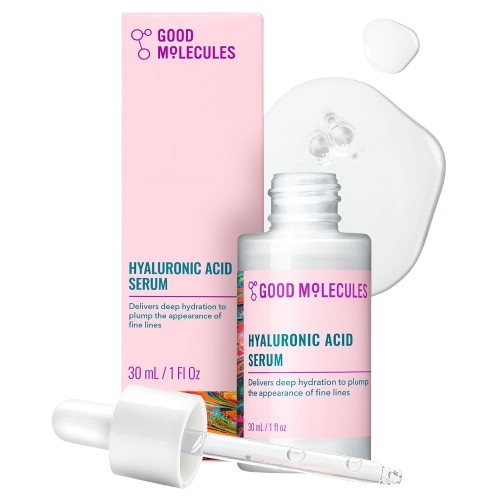
Good Molecules Hyaluronic Acid Serum
Summary
Good Molecules Hyaluronic Acid Serum is a lightweight, water-based facial serum designed primarily to hydrate dehydrated skin. Its formula is intentionally simple, using hyaluronic acid alongside glycerin and propanediol to help attract and retain water. The brand describes it as suitable for all skin types and recommends using it daily, morning and night, preferably on damp skin before applying moisturizer.
The main ingredient of interest is sodium hyaluronate, a form of hyaluronic acid commonly used in skincare as a humectant. Humectants help draw water toward the skin, which can temporarily improve the appearance of dryness and make skin feel smoother and more supple. The American Academy of Dermatology also lists hyaluronic acid among ingredients that can help moisturize dry skin.
Good Molecules lists sodium hyaluronate at 1% in the current formula. The product also contains 3% glycerin and 10% propanediol. These supporting humectants make the serum more than a single-ingredient hyaluronic acid product and contribute to its lightweight moisturizing effect. The manufacturer lists the serum as fragrance-free, vegan and cruelty-free.
Another positive aspect from a safety perspective is the relatively short ingredient list. Unlike some treatment serums, this product does not contain retinol, exfoliating acids, essential oils or added fragrance. That makes it a relatively uncomplicated option for people who want additional hydration without introducing several strong active ingredients at once. However, a simple formula does not guarantee that every individual will tolerate it perfectly.
The product is intended to be applied to damp skin. This is a practical recommendation for a hydrating serum because humectants work by interacting with water. Good Molecules recommends applying a few drops before oils, creams or moisturizers and allowing approximately 30 seconds for the serum to absorb. A moisturizer can then help support longer-lasting hydration.
It is important to distinguish hydration from treatment of a specific skin disease. Hyaluronic acid can make dry or dehydrated skin appear plumper and smoother, but this serum should not be viewed as a treatment for acne, eczema or other dermatological conditions. The American Academy of Dermatology notes that moisturizers can be useful for maintaining skin hydration, including for people whose acne treatments cause dryness, but persistent skin problems may require professional assessment.
Good Molecules reports consumer testing involving 457 verified users, with the company stating that participants reported improvements in perceived hydration and plumpness. These are consumer-survey results rather than independent clinical evidence, so they should be interpreted as supporting product feedback rather than proof that every user will experience the same results.
From a SafetyScore perspective, the formula has a strong overall profile. It is fragrance-free and contains a small number of primarily hydrating ingredients. The principal consideration is that even relatively simple skincare products can occasionally cause irritation or sensitivity in individual users. If burning, redness or persistent irritation develops, use should be discontinued.
Good Molecules Hyaluronic Acid Serum is a straightforward hydration-focused serum rather than an aggressive treatment product. Its simple formula, fragrance-free profile and combination of sodium hyaluronate, glycerin and propanediol make it a practical choice for adding moisture to a skincare routine. As always, the ingredient list on the product packaging should be checked because cosmetic formulas can change over time.
Pros
- rimarily a hydrating serum, so it does not provide the broader treatment benefits of products containing retinoids, exfoliating acids or other targeted actives.
- Very dry skin may need a moisturizer or cream over the serum to help maintain hydration.
- Applying it to damp skin is recommended by the manufacturer for best results.
- Although the formula is relatively simple, individual sensitivity or irritation is still possible.
- The manufacturer notes that ingredients can change, so the packaging should be checked for the most current formula.
Cons
- Simple 9-ingredient formula focused mainly on hydration.
- Contains 1% sodium hyaluronate, the key hydrating ingredient.
- 3% glycerin provides additional humectant support.
- 10% propanediol helps provide hydration and contributes to the lightweight texture.
- Fragrance-free, which can be beneficial for people who prefer to avoid added fragrance.
- Lightweight, water-based formula suitable for layering.
- Suitable for all skin types, according to Good Molecules.
- Can be used morning and evening.
- Contains tocopherol (vitamin E) in a small amount.
Safety Scores
Ingredient List
Aqua/Water/Eau 85.4%, Citric Acid 0.05%, Ethylhexylglycerin 0.05%, Glycerin 3.0%, Hydroxyacetophenone 0.30%, Propanediol 10.0%, Sodium Citrate 0.20%, Sodium Hyaluronate 1.0%, Tocopherol 5 ppm