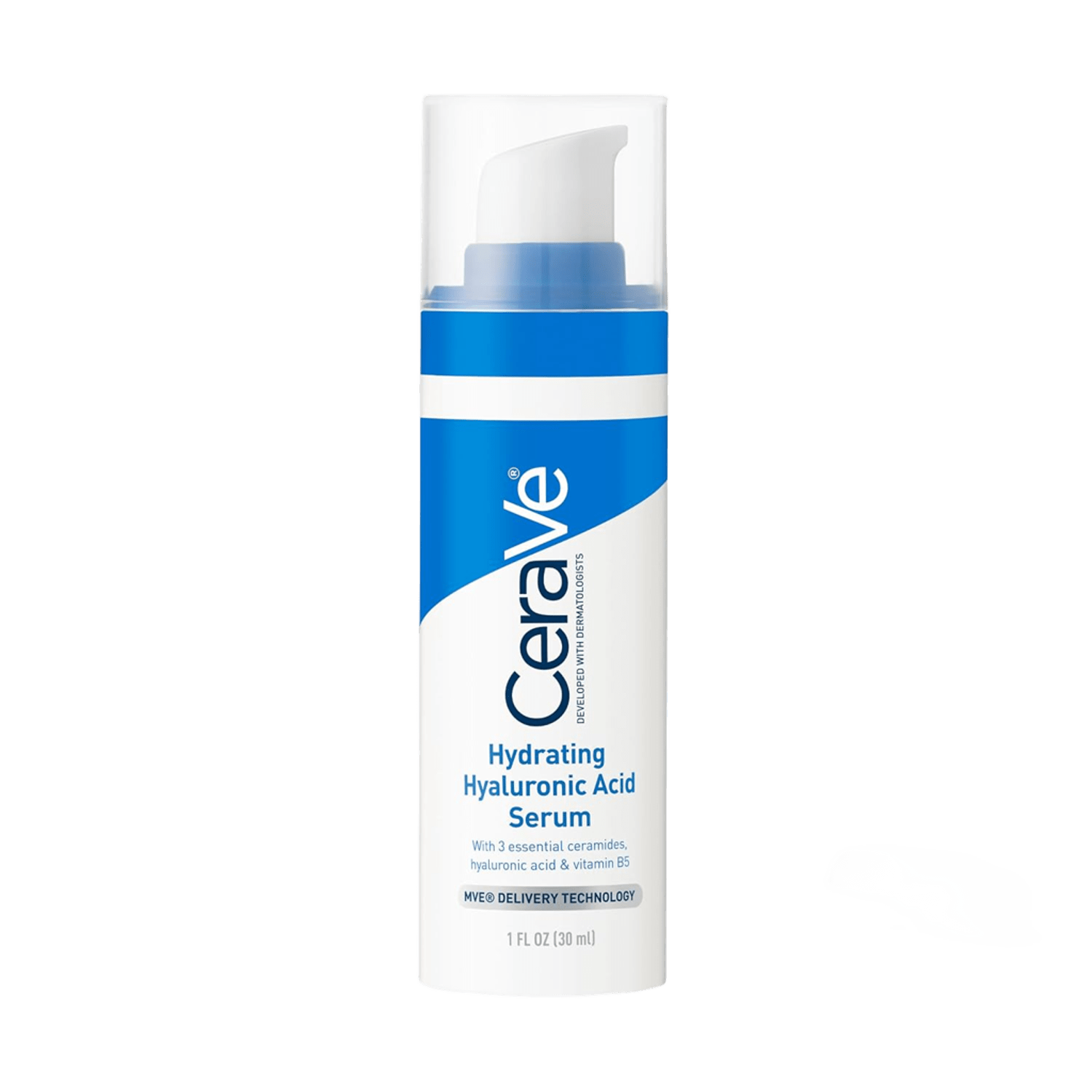
CeraVe Hydrating Hyaluronic Acid Serum is a lightweight serum designed to provide daily hydration while helping support the skin’s natural barrier. Rather than relying on hyaluronic acid alone, the formula combines sodium hyaluronate, glycerin, panthenol and three essential ceramides, giving it a more complete moisturizing profile than many simple hyaluronic acid serums. CeraVe describes the product as suitable for all skin types and highlights its fragrance-free, non-comedogenic formulation. The serum is also developed with dermatologists.
The main active is sodium hyaluronate, a form of hyaluronic acid used as a humectant. It helps attract and retain water at the skin’s surface, making it particularly useful for dry, dehydrated or tight-feeling skin. CeraVe states that the serum can provide up to 24 hours of hydration, based on instrumental testing. Hyaluronic acid can improve the appearance of skin that looks dry or dull, although the results are primarily related to hydration rather than permanent changes to the skin.
One of the strongest aspects of the formula is its three-ceramide complex. The serum contains ceramide NP, ceramide AP and ceramide EOP. Ceramides are naturally occurring lipids found in the outer layers of the skin and are important for maintaining the skin barrier. Their inclusion makes this serum different from minimalist hyaluronic acid products that focus almost entirely on surface hydration.
The formula also contains glycerin and panthenol, also known as vitamin B5. Glycerin is a well-established humectant that helps draw moisture toward the outer layer of the skin, while panthenol is commonly used in cosmetic formulations for its moisturizing and conditioning properties. CeraVe specifically identifies vitamin B5 as providing skin-soothing benefits. Together with sodium hyaluronate and ceramides, these ingredients give the serum a strong hydration and barrier-support profile.
Another notable ingredient is dimethicone, a silicone-based conditioning ingredient that helps provide a smooth texture and can reduce moisture loss from the skin’s surface. Cetearyl ethylhexanoate also contributes to the serum’s emollient feel. This explains why CeraVe’s product has more of a lightweight serum-cream texture rather than the watery consistency associated with some basic hyaluronic acid serums.
From a SafetyScore perspective, the formula is relatively conservative. It is fragrance-free, paraben-free and non-comedogenic, according to CeraVe. It also does not depend on essential oils or a large collection of botanical extracts for its primary benefits. This is particularly useful for consumers who prefer a straightforward hydration-focused formula with fewer potential fragrance-related irritation concerns.
There are still some ingredients worth considering. Phenoxyethanol and ethylhexylglycerin are included as part of the preservation system. These are common cosmetic preservation ingredients and are used to help protect water-based formulas from microbial contamination. They are not inherently problematic at permitted cosmetic concentrations, but preservatives can occasionally cause individual sensitivity.
The formula also contains isopropyl myristate, an emollient used to improve the skin feel of cosmetic products. Although CeraVe markets the finished serum as non-comedogenic, people who are particularly prone to clogged pores may still prefer to monitor how their skin responds. Non-comedogenic testing does not guarantee that every individual will have the same experience.
CeraVe uses MVE delivery technology in the formula and describes it as a controlled-release system designed to provide all-day hydration. The company recommends applying the serum evenly to the face and neck daily. It can be used alone or layered underneath a moisturizer.
CeraVe Hydrating Hyaluronic Acid Serum has a strong hydration and barrier-support formula. Its main strengths are sodium hyaluronate, glycerin, panthenol and three essential ceramides, combined with a fragrance-free and non-comedogenic formulation. The main SafetyScore considerations are the preservation system and individual tolerance to specific emollients.
For SafetyScore.io, this is an informational ingredient and formula assessment, not a medical safety guarantee or regulatory certification. Individual tolerance can vary, and the ingredient list on the actual product packaging should always be considered the final reference.
Pros
- Sodium hyaluronate for hydration
- Three essential ceramides
- Glycerin provides humectant support
- Panthenol (vitamin B5) supports skin conditioning
- Fragrance-free
- Paraben-free
- Non-comedogenic according to CeraVe
- No essential oils
- No large botanical blend
- Designed for all skin types
- Developed with dermatologists
- MVE delivery technology
- Can be layered under moisturizer
- Lightweight serum texture
Cons
- Phenoxyethanol is part of the preservation system
- Contains isopropyl myristate, which may not suit every congestion-prone skin type
- Primarily focused on hydration rather than brightening or active anti-aging treatment
- Individual sensitivity to preservatives or other ingredients is still possible
- Hydration benefits require consistent use
- Ingredient lists can change over time
Safety Scores
Ingredient List
Ammonium Polyacryloyldimethyl Taurate, Aqua/Water, Behentrimonium Methosulfate, Caprylyl Glycol, Carbomer, Ceramide AP, Ceramide EOP, Ceramide NP, Cetearyl Alcohol, Cetearyl Ethylhexanoate, Cholesterol, Citric Acid, Dimethicone, Disodium EDTA, Ethylhexylglycerin, Glycerin, Isopropyl Myristate, Panthenol, Phenoxyethanol, Phytosphingosine, Sodium Hyaluronate, Sodium Hydroxide, Sodium Lauroyl Lactylate, Xanthan Gum