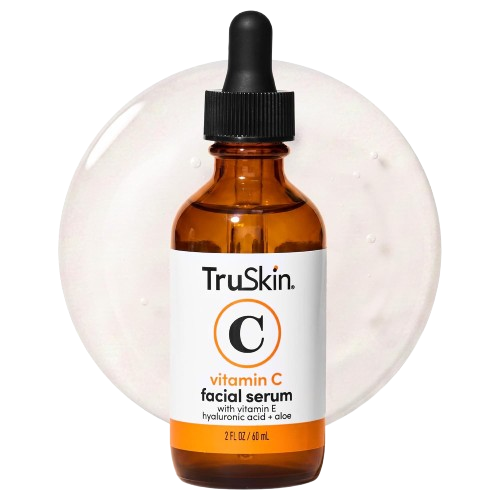
TruSkin Vitamin C Serum is a lightweight facial serum designed to improve the appearance of dull skin, uneven tone, dark spots and visible signs of aging. Rather than using pure L-ascorbic acid, the formula uses Sodium Ascorbyl Phosphate (SAP), a vitamin C derivative that TruSkin describes as stable and gentle. The serum also combines aloe vera, vitamin E, MSM, sodium hyaluronate and several botanical extracts, giving it a broader skin-conditioning profile than a basic vitamin C serum. TruSkin markets the product for all skin types and recommends it for concerns including dullness, uneven tone, dark spots, fine lines and wrinkles.
The main active is Sodium Ascorbyl Phosphate, a water-soluble vitamin C derivative. TruSkin specifically selected SAP as a gentler alternative to traditional ascorbic acid and highlights its stability and antioxidant properties. Vitamin C is widely used in skincare to provide antioxidant support and improve the appearance of uneven skin tone. However, SAP is chemically different from pure L-ascorbic acid, so the two should not be treated as interchangeable when comparing formulas or expected results.
One of the strongest aspects of the formula is its hydrating and skin-conditioning base. Organic aloe vera appears near the beginning of the ingredient list, while glycerin and sodium hyaluronate provide humectant support. TruSkin also uses Cassia angustifolia seed polysaccharide, which the company describes as a plant-based botanical alternative to hyaluronic acid. These ingredients help make the serum more than simply an antioxidant treatment and can contribute to a smoother, more hydrated skin feel.
The formula also contains tocopheryl acetate, a form of vitamin E commonly used for antioxidant and skin-conditioning purposes. MSM (dimethyl sulfone) is another notable ingredient included by TruSkin as part of its skin-supporting formula. The serum also contains Centella asiatica, horsetail, dandelion and geranium extracts. Centella is commonly used in skincare for its soothing and conditioning properties, while the other botanical extracts contribute to the product’s botanical-focused formulation.
There are some ingredients that deserve attention from a SafetyScore perspective. Witch hazel water appears relatively high in the ingredient list, immediately after the vitamin C derivative. Witch hazel is commonly used for its astringent and skin-conditioning properties, but highly dry or reactive skin may not always tolerate astringent-focused products well. The formula also contains several botanical extracts, which are not inherently unsafe but increase the number of individual ingredients that could potentially cause sensitivity.
The preservation system is relatively simple. Phenoxyethanol and ethylhexylglycerin appear toward the end of the ingredient list. These are widely used cosmetic preservation ingredients and are used to help protect water-based products from microbial contamination. TruSkin states that the serum is formulated without parabens, sulfates, phthalates and PEGs.
Another important point is that TruSkin sells several vitamin C serums with substantially different formulas. The standard Vitamin C Serum evaluated here should not be confused with the brand’s Vitamin C Super Serum, which contains retinol, niacinamide, salicylic acid, squalane and grapefruit peel oil. The Super Serum therefore has a more active formulation and potentially different irritation considerations.
TruSkin recommends applying 3–5 drops to clean skin and allowing the serum to absorb before moisturizer and sunscreen. The product can be used once or twice daily according to the brand, and TruSkin recommends patch testing for 24–48 hours before broader application. Sunscreen is particularly useful when addressing dark spots and uneven pigmentation because ongoing UV exposure can contribute to visible discoloration.
Overall, TruSkin Vitamin C Serum has a well-balanced brightening and hydration-focused formula. Its main strengths are the stable SAP vitamin C, aloe vera, vitamin E, glycerin, sodium hyaluronate and soothing botanical ingredients. The main SafetyScore considerations are witch hazel, the relatively large botanical component and the possibility of individual sensitivity.
For SafetyScore.io, this is an informational ingredient and formula assessment, not a medical safety guarantee or regulatory certification. Individual tolerance can vary, and the ingredient list on the actual product packaging should always be considered the final reference.
Pros
- Sodium Ascorbyl Phosphate vitamin C derivative
- Stable vitamin C format
- Aloe vera appears high in the formula
- Contains sodium hyaluronate
- Contains glycerin for hydration
- Vitamin E provides additional antioxidant support
- Contains Centella asiatica
- Plant-based botanical hyaluronic acid alternative
- No parabens according to TruSkin
- No sulfates according to TruSkin
- No phthalates according to TruSkin
- No PEGs according to TruSkin
- Lightweight formula
- Suitable for all skin types according to the brand
Cons
- Witch hazel may not suit very dry or reactive skin
- Relatively large number of botanical extracts
- Phenoxyethanol is part of the preservation system
- SAP is not directly comparable to high-strength L-ascorbic acid
- Individual sensitivity to botanical ingredients remains possible
- Brightening results require consistent use
- Formula and claims can change over time
Safety Scores
Ingredient List
Arginine, Carbomer, Cassia Angustifolia Seed Polysaccharide, Centella Asiatica (Gotu Kola) Extract, Dimethyl Sulfone (MSM), Equisetum Arvense (Horsetail) Extract, Ethylhexylglycerin, Geranium Maculatum (Geranium) Extract, Glycerin, Hamamelis Virginiana (Witch Hazel) Water, Organic Aloe Barbadensis (Aloe Vera) Leaf Juice Powder, Phenoxyethanol, Simmondsia Chinensis (Jojoba) Seed Oil, Sodium Ascorbyl Phosphate (Vitamin C), Sodium Hyaluronate, Sodium Hydroxide, Taraxacum Officinale (Dandelion) Extract, Tocopheryl Acetate (Vitamin E), Water (Aqua)